

There Are Hands Behind Every Watch
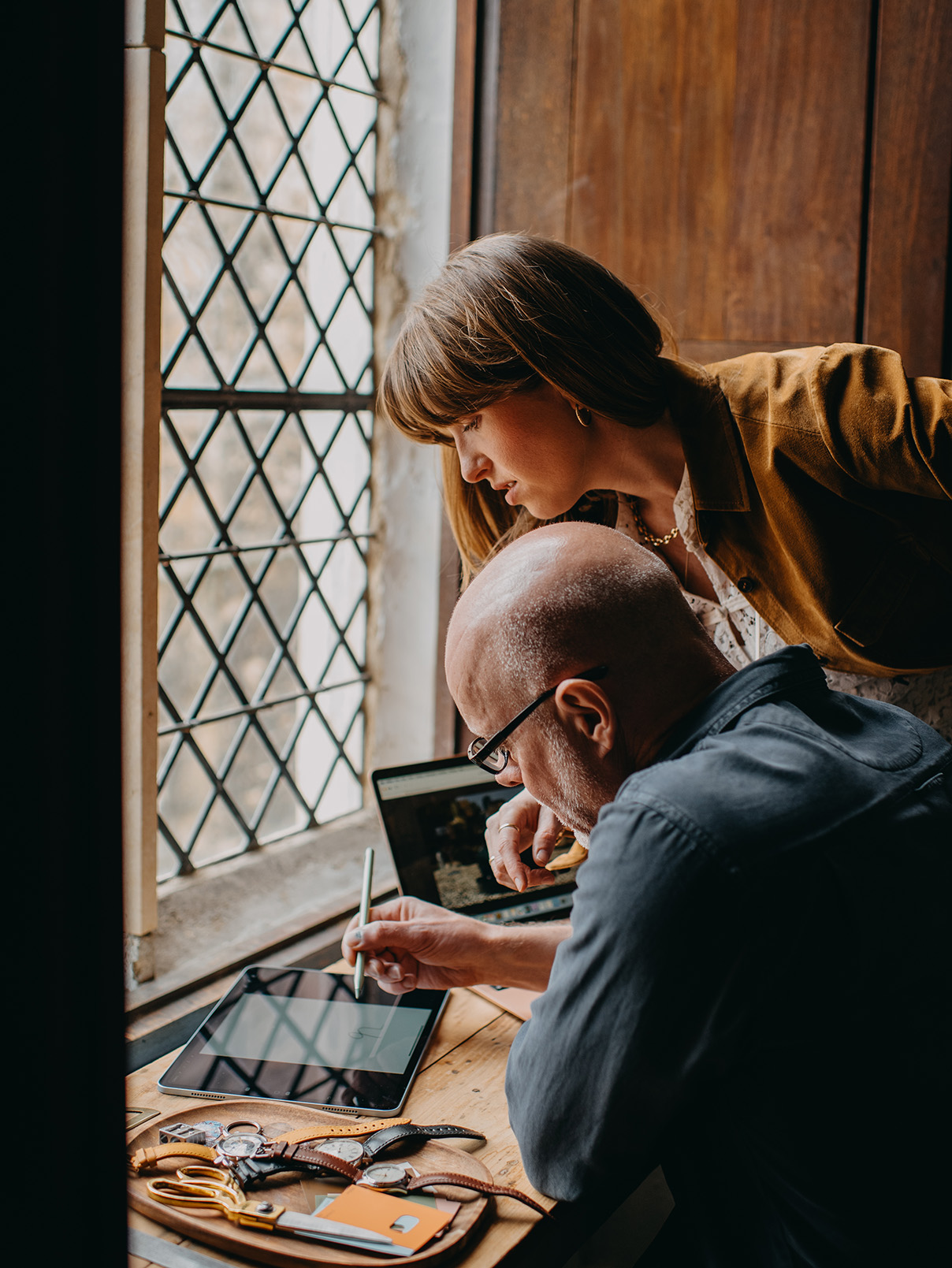
We can buy almost anything with a few clicks. Stock is plentiful, delivery is quick, and there's always something else ready to be sent out. Convenience has its place. But there's something different about choosing an object that people have spent time making, and knowing a little about the hands and skills behind it. At Pinchbeck, that's part of what we enjoy about making watches. Every watch brings together people, materials and decisions, from the first ideas about its design to the moment it leaves our workshop.

The feeling behind something handmade
There's something satisfying about knowing who made the things we own. When you know a little about the person behind an object, the skills they bring to it and the time they've spent getting it right, it can change how you feel about owning it. It becomes more than something you've bought. You understand a little of the work and thought that went into it.
That connection can be particularly meaningful when you're giving something to someone else. A gift becomes part of a story: why you chose it, what it marks, and the person who gave it to you. We think that's part of the appeal of something handmade. Not that it's automatically better, but that there's a human story behind it, if you want to look a little closer.
A watch made by people
Every Pinchbeck watch is assembled by hand in our workshop in Lincoln. Rob brings the components together at the bench, working with the movement, case, dial, hands and other details that make up the finished watch. He assembles each one, then checks and tests it before it leaves us. It's work that calls for concentration, experience and plenty of small decisions. Much of it happens out of sight. You might see the finished dial and polished case when you first look at a watch, but there's a lot of work behind what eventually reaches your wrist. We design our watches here and work with specialist suppliers for the components and skills we need. It's a combination of our own work and the experience of people who know their particular craft. And those relationships matter to us.
The people behind the details
Take our leather straps. We work with Tanner Bates, a leather workshop in Devon, whose team makes leather goods by hand. The straps bring another set of hands and another set of skills into the story of a Pinchbeck watch.
Then there's Bedford Dials in Tenbury Wells, Worcestershire. We've worked with them for around twenty years. Their specialist printing skills help bring our dial designs to life, and getting the colour and finish right can take testing and adjustment.
The dial is often the first thing you notice about a watch. Its colour, markings and details help give the watch its character. There's a great deal of thought behind those decisions, and specialist knowledge involved in getting them right.
Tanner Bates and Bedford Dials are independent businesses with their own experience and ways of working. We value the relationships we've built with them. Their contribution is part of what makes our watches what they are.
We don't make every component ourselves, and we wouldn't pretend otherwise. We work with people who know their craft, then bring those parts together in our own workshop.
It's a shared effort, built on experience and trust.
More than something to open
A watch can mark a particular moment in someone's life. A birthday, a wedding, a new job, a retirement, or something more personal that doesn't need explaining to anyone else.
Sometimes it's a gift from someone who knows you well. Sometimes it's a watch you choose for yourself to mark a change or an achievement.
Over time, the watch can become connected to that moment. You wear it to work, take it on holiday, glance at it during an ordinary day. It becomes part of your routine, and perhaps part of how you remember a particular time in your life.
The watch itself doesn't need a grand story. Often, its meaning comes from the person who gave it to you, the reason you chose it, or the years you've spent wearing it.
That's one of the things we like about mechanical watches. They're physical things, made to be worn and looked after. They can be serviced, repaired and kept going. They gather a few marks along the way, and those marks become part of their story, too.
We know where a Pinchbeck begins. We don't know all the places it will go, or the moments it will be there to mark.
Choosing what you want to live with
We have more choice than ever, and it's easy to move quickly from one thing to the next. Sometimes that's useful. Sometimes it's worth taking a little longer.
Choosing a watch gives you a reason to look closely. You notice the dial, the shape of the case, the colour of the hands and the way it sits on your wrist. You begin to work out what you like, rather than simply what is available.
When you choose a Pinchbeck, you're also choosing a small independent British watchmaker. You're supporting our workshop in Lincoln and the specialist businesses we work with to bring each watch together.
We're not suggesting that every purchase needs a grand story behind it. But we do think it's good to know where the things we own come from, and to feel a connection to the people who make them.
One watch at a time
Most Pinchbeck watches are made to order. We assemble each one here in Lincoln for the person who has chosen it, then check and test it before it makes its way to its new owner.
Our workshop sits inside Exchequer Gate Arch, a medieval archway directly opposite Lincoln Cathedral. It's where our small team works, where the watches come together, and where each one begins its journey.
It's a particular place to make watches. But it's also simply where we come to work, day after day, putting watches together by hand.
There are hands behind every Pinchbeck. There are specialist skills behind its parts, and a small team here in Lincoln bringing everything together.
When you choose one, you're choosing the finished watch, of course. But you're also choosing the people and the process behind it.
It takes time to make a watch. And we think that's time well spent.
Explore our Made to Order Collection.


Comments